
 EN — English
 HY — Հայերեն
 FR — Français
In 2010, COAF set out to better understand a growing concern in its beneficiary communities: our children’s oral health.
What began as a simple assessment quickly revealed a crisis, and ultimately led to one of the most impactful, evidence-based interventions in COAF health programming.
The Reality, Widespread Decay in Permanent Teeth
Early screenings conducted in rural communities such as Bagaran and Yervandashat painted a stark picture: Nearly 99% of children had tooth decay. Six-year-olds were found to have up to 12–14 decayed baby teeth, while nine-year-olds already showed damage in their permanent teeth.
“It’s tragic reality when you walk into a first-grade classroom and see that the first permanent molars, which emerged only a few months earlier, have already decayed.”
“It’s tragic reality when you walk into a first-grade classroom and see that the first permanent molars, which emerged only a few months earlier, have already decayed,” explains Lusine Sahakyan, the manager of COAF's dental programs.
These findings pointed not only to a health issue, but to a deeper systemic gap—limited access to dental care, low awareness of oral hygiene, and, in many cases, even a lack of running water in homes. This moment became a turning point.

From Observation to Intervention
Rather than responding with treatment alone, COAF designed a preventative, school-based model—one that could reach children consistently and early.
As later documented in a peer-reviewed study, COAF implemented a program that combined:
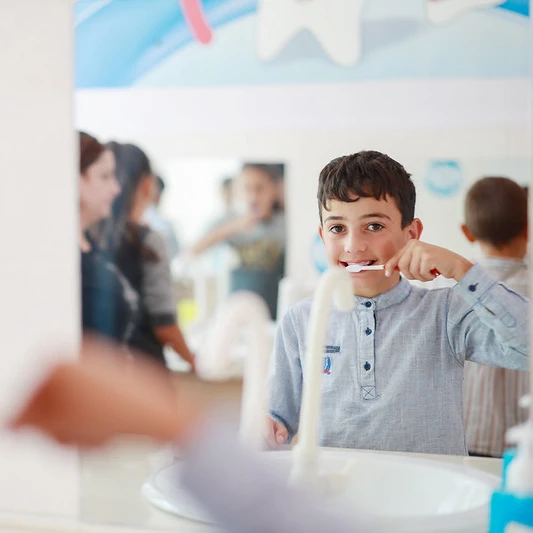
- Building life-long habits: daily supervised toothbrushing with fluoride toothpaste in schools
- Engaging the whole family: oral hygiene education for both children and parents
- Embedding health in schools: the installation of dedicated brushing spaces, known as Brushodromes
This model was intentionally designed for rural realities—where access to dental services and even basic infrastructure was limited.
By bringing prevention into schools, where habits could be formed daily, COAF addressed the root of the issue, not just its symptoms.
Measuring Impact: What Changed
The study compared dental health data before the intervention (2013) and four years after (2017) among children aged 6–7 and 10–11 in participating villages. The results were clear:
- Among 10–11-year-olds, the number of decayed permanent teeth decreased by 31.1%
- Both younger and older age groups showed statistically significant reductions in decay levels
- Children who participated in the program consistently had fewer cavities than those who had not
While overall prevalence of cavities remained high, a reflection of long-standing structural challenges, the severity and intensity of decay declined meaningfully.
This distinction is important: it showed that change was not only possible, but measurable.
Spring Appeal 2026—From Proof to Scale
🌟 More Prevention 🌟Earlier Intervention 🌟More Resources
The lessons were clear. Focusing on prevention, changing habits, and meeting kids in schools works—however there were still gaps. COAF was not connecting with children early enough, and the lack of access to fluoridation was notable.
This spring, COAF is expanding preventive dental care to every kindergarten across Armavir, reaching approximately children at the earliest and most critical stage of development.
This expansion builds directly on what our 2010-2013 study demonstrated: that consistent, early intervention can significantly reduce the severity of dental disease and lay the foundation for lifelong health. The model remains the same in principle, but broader in reach:
- Meet kids EARLY: preventive care delivered in every kindergarten in Armavir
- Build Habits: education for families and caregivers works. Let’s scale
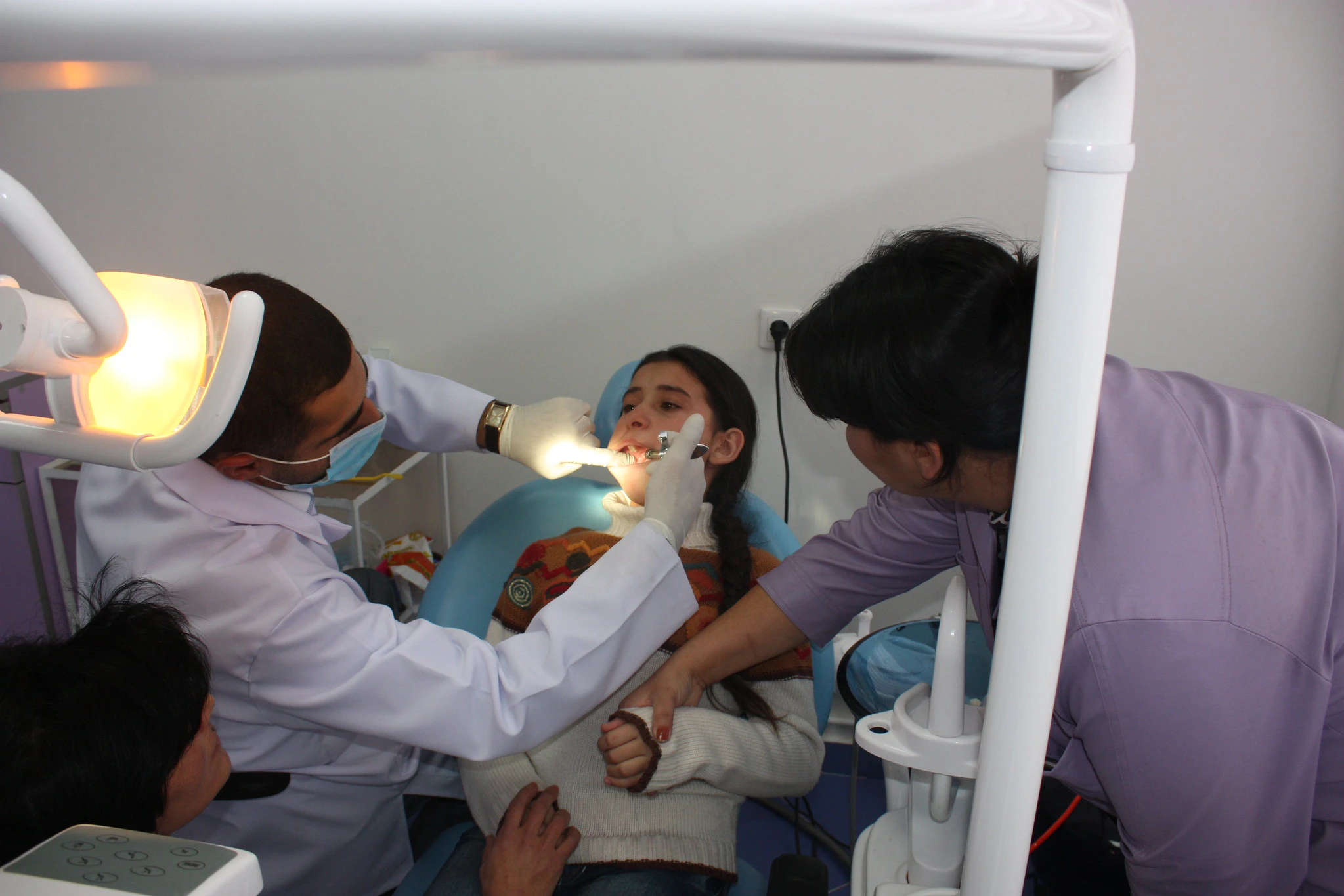
- Treatment for Advanced Cases: regular, structured interventions through mobile dental units
What was once a proof of concept is now becoming an evidenced based system regional transformation. Now, the vision needs your help to make it a reality.
In 10 villages, we learned what works. Help us scale that impact across 67 villages today.
Donate Now
Stonger Health, Stronger Armenia
Help us reach our goal of $270,000 goal by June 20, 2026