

 EN — English
 HY — Հայերեն
 FR — Français
Traditional Armenian Carpets Inspire SMART Students Designs
*Ce blog a été traduit à l’aide de l’IA

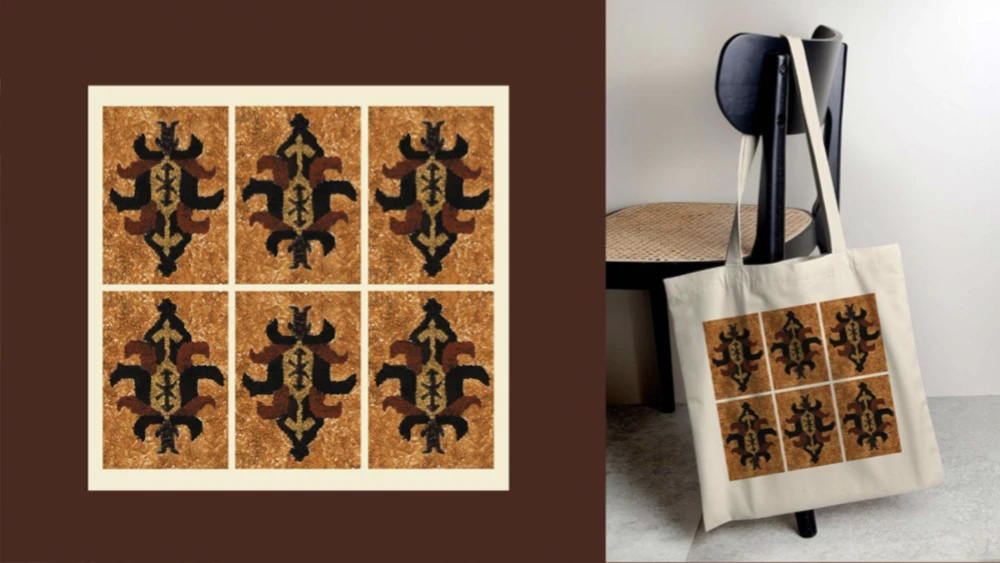
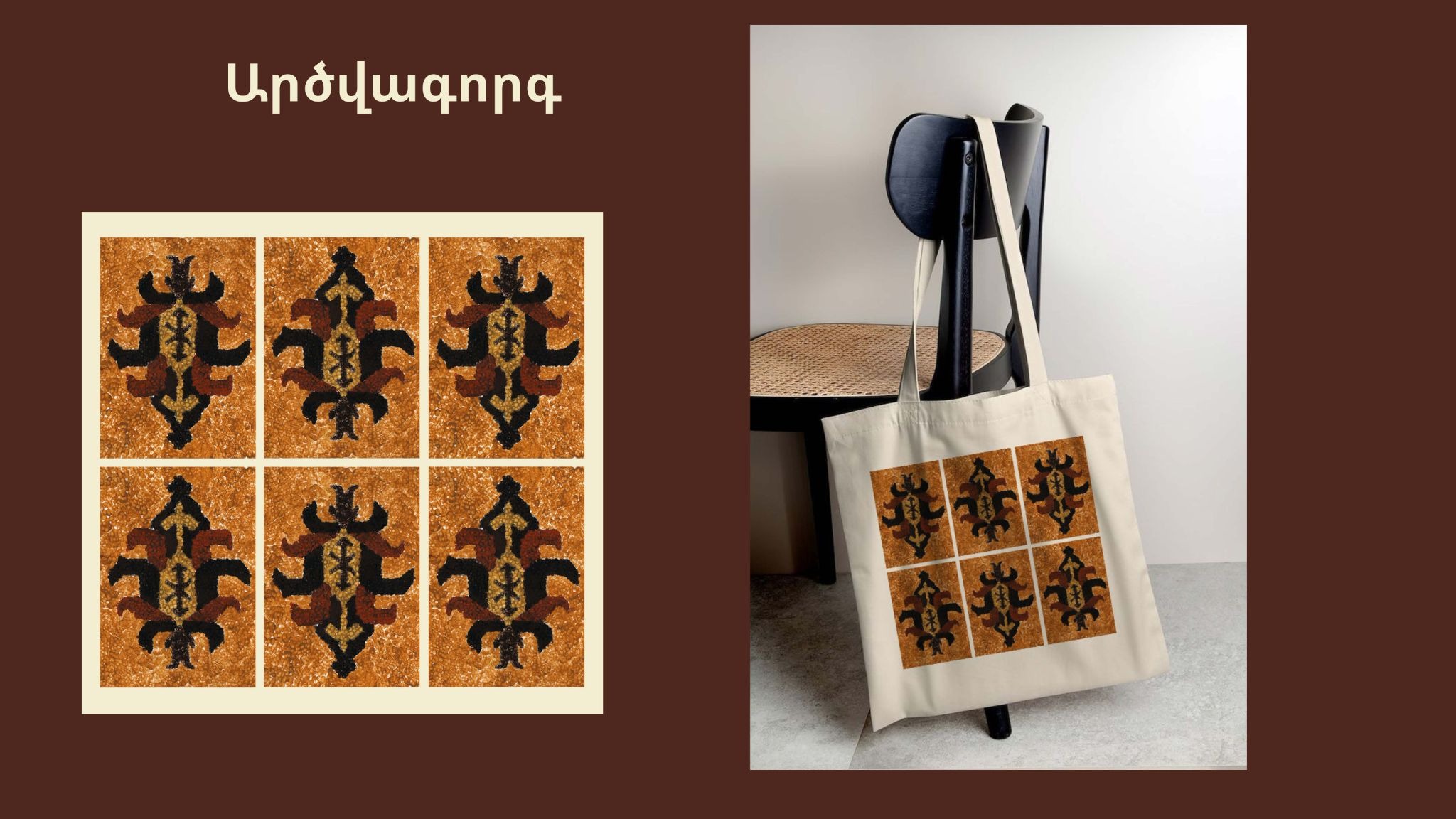
Design tote bags inspired by traditional Armenian carpets, from the Pazirik style to dragon patterned and pointillism-style. This was the assignment given to a group of fifteen 12-18 year old SMART students, in the Drawing Program.
According to the SMART Center’s drawing instructor Ruzanna Hoghmrtsyan, the idea came from Rima Asryan, now a SMART graduate, for whom this project became the final stop of her SMART journey.
The drawing program provided dozens of SMART students like Rima with an opportunity to connect more deeply with Armenia’s carpet-weaving heritage and reinterpret it through their own creative lens, helping preserve and promote a treasured cultural tradition for a new generation.
“What began as a drawing project soon evolved into a much larger research journey. We explored the meanings behind traditional ornaments, symbols, and colors, and our group focused on the famous Dragon Carpet. As I learned about the dragon’s rich symbolism—representing both danger and protection—I was reminded of Uzundara, a traditional bridal dance whose hand movements resemble the dragon motifs woven into these carpets. Historically, newlywed brides were seated beneath Dragon Carpets as a symbol of protection, reflecting one of the dragon’s most enduring meanings as a guardian,” says Rima.
She adds that other groups in the class studied the Armenian Star Carpets, Eagle Carpets, Pazyryk carpets, Khndzoresk carpets, and carpets with repeating medallions.
The students’ research topics also included counterfeit carpets and fabrics sold under the label of Armenian ornaments. Rima even has a “life hack” for telling them apart.
“In Armenian carpet weaving, the color gold was never used. We only had gold-thread embroidery, which is done with golden thread, but that was never part of carpet-making.”
Students obtained photographs of old carpets preserved at the Ijevan History Museum and in a private collection of Artsakh carpets in Dilijan, and created six collages that would incorporate symbols and patterns characteristic of those carpets.
“By creating tote bags with these Armenian carpet ornaments, we tried to contribute to preserving and raising awareness of our national heritage,” Rima concluded.
Today, the final tote bags are available for purchase at the COAF Visitor Center, and online at shop.coaf.org.
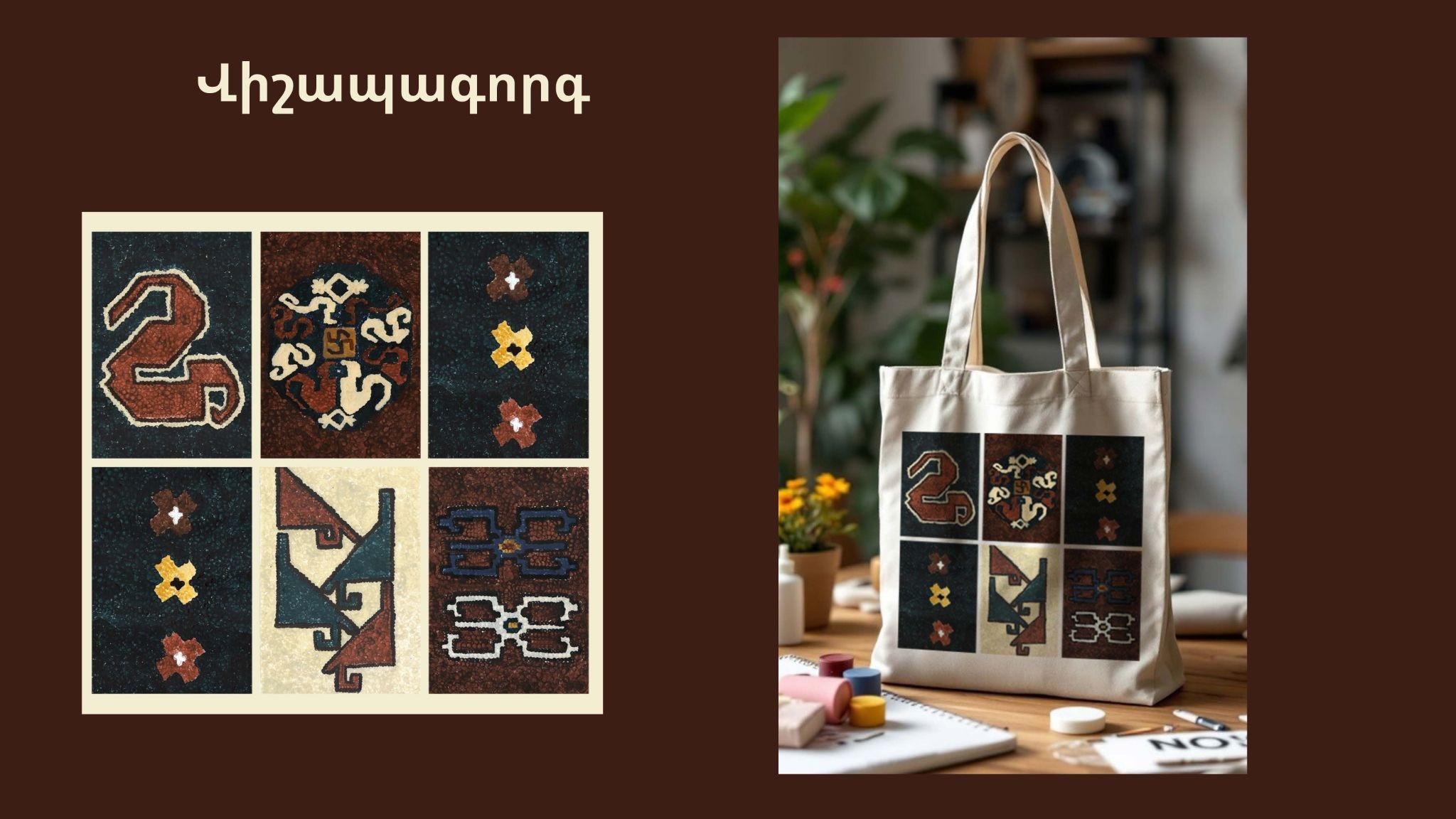
Excellent examples of classical Dragon Carpets are preserved in museums in Berlin, London, Vienna, Esztergom, Istanbul, Budapest, New York City, Washington, and many other cities around the world. During the revival of Armenian carpet art in Soviet Armenia, new varieties of Dragon Carpets also emerged, based on sketches by carpet artists and produced both by folk masters and machine methods.
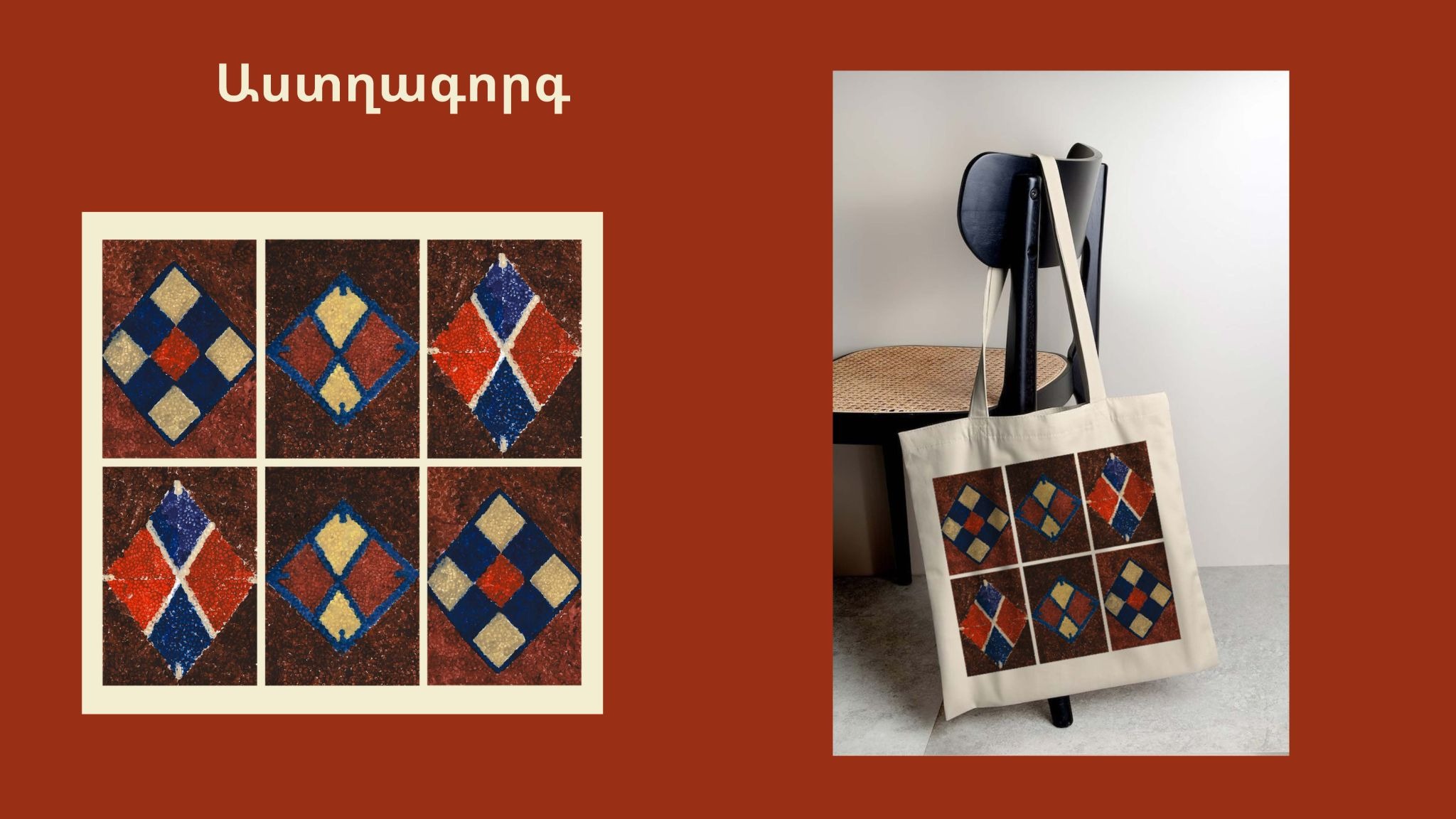
The traditional colors of Star Carpets are red, dark blue, black, white, and golden shades.
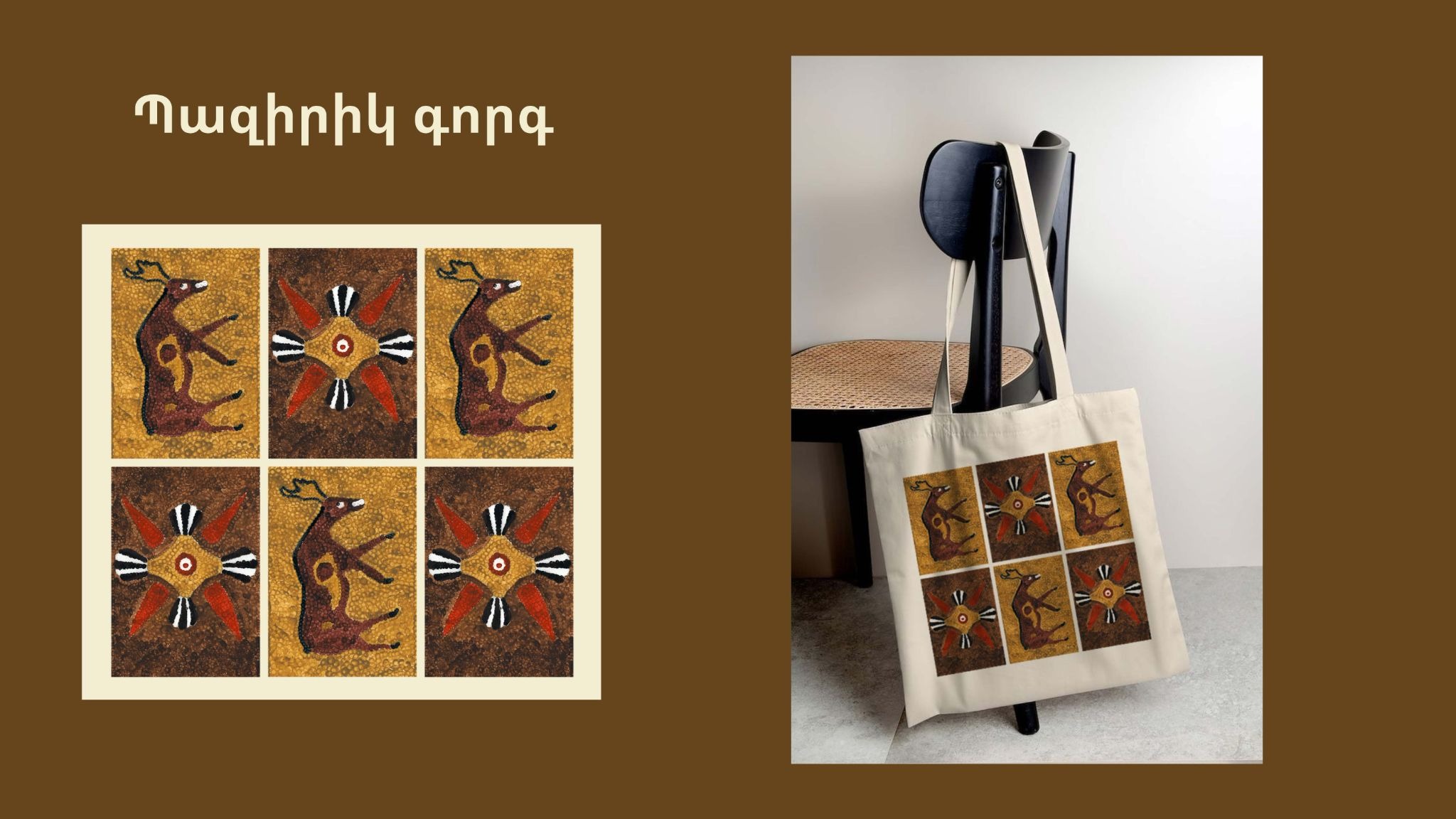
The Pazyryk carpet tradition was widespread in the Armenian regions of Artsakh, Syunik, and Vayots Dzor. The carpet’s symbols represent the power of nature, rebirth, light, and protection.
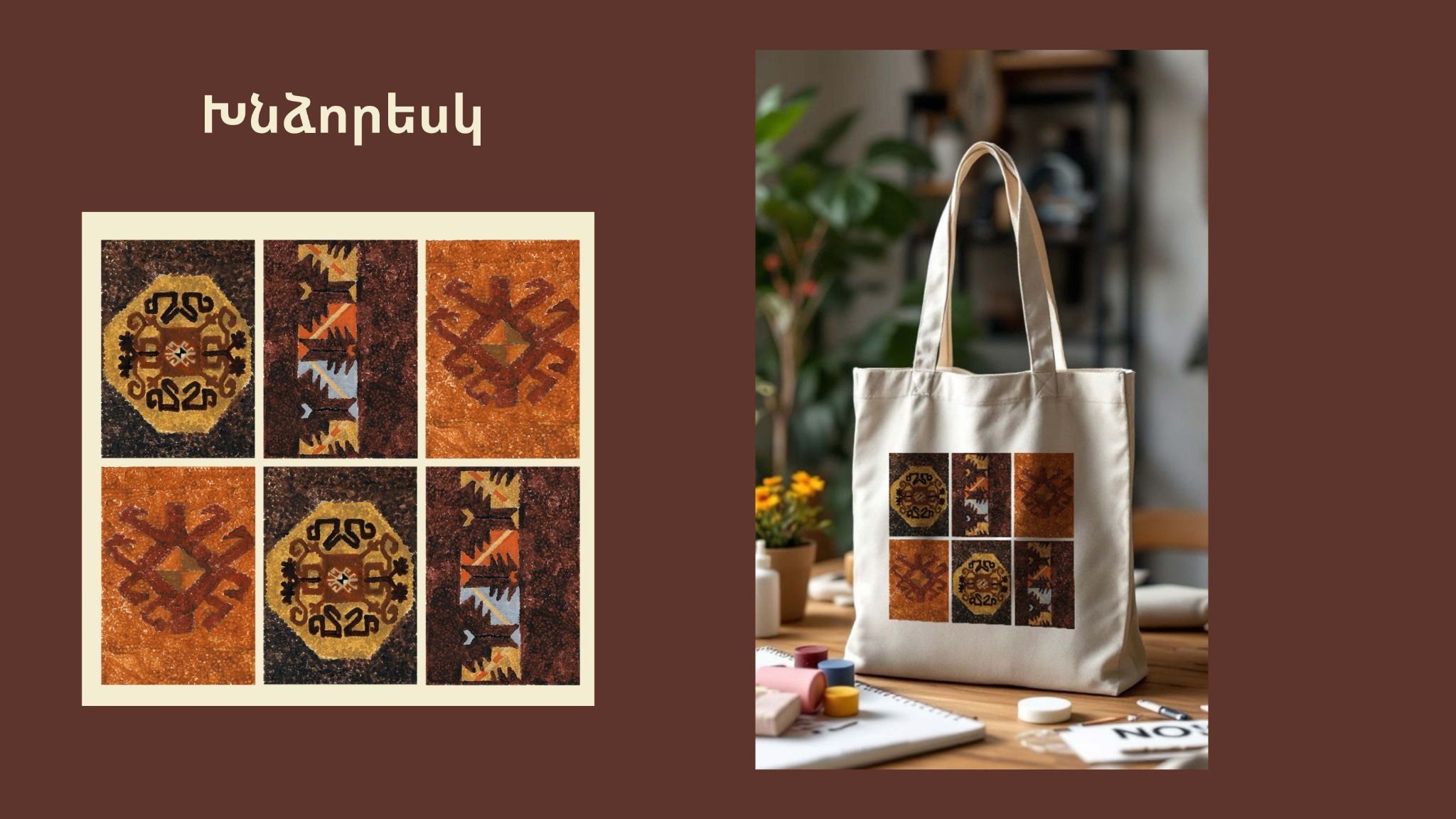
Khndzoresk carpets are a type of traditional Armenian carpet originating from the village of Khndzoresk in the Syunik region. They are known for their dense knots and geometric and floral ornaments. These carpets reflect the cultural traditions of the region and the rich heritage of Armenian carpet weaving.
The Eagle Carpet is a traditional Armenian carpet type whose main ornament is the image of an eagle. In Armenian culture, the eagle symbolizes strength, bravery, and protection. These carpets usually feature a large central composition or repeating eagle motifs, often surrounded by geometric and floral ornaments. Eagle Carpets were woven in various regions of Armenia and are distinguished by their vivid colors and symbolic imagery.
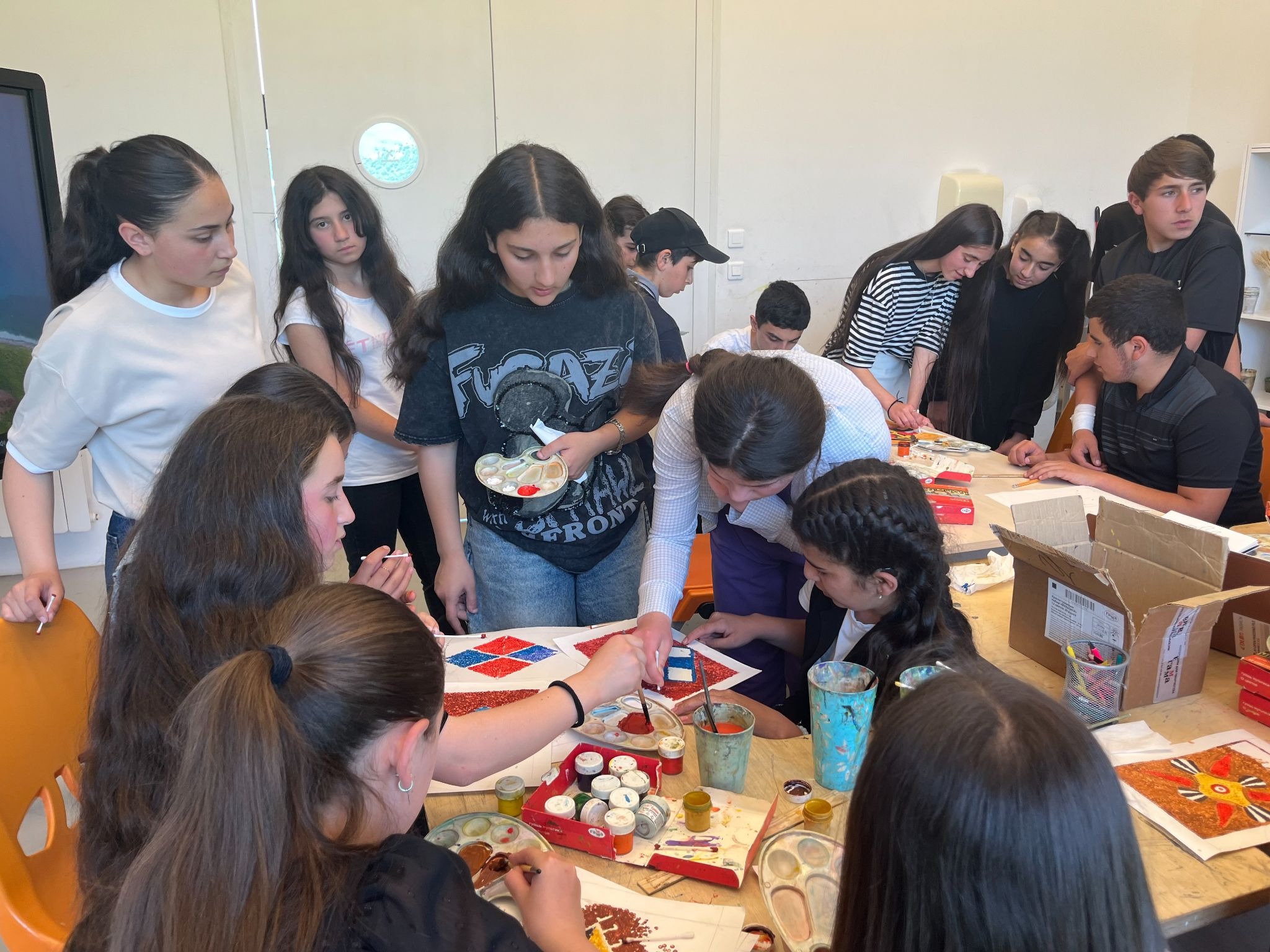
Two hands are good, but lots of hands are better. The finance program team joined efforts with the drawing group to help with the painting. Through this collaboration, they also developed a business plan for the tote bags decorated with carpet ornaments.
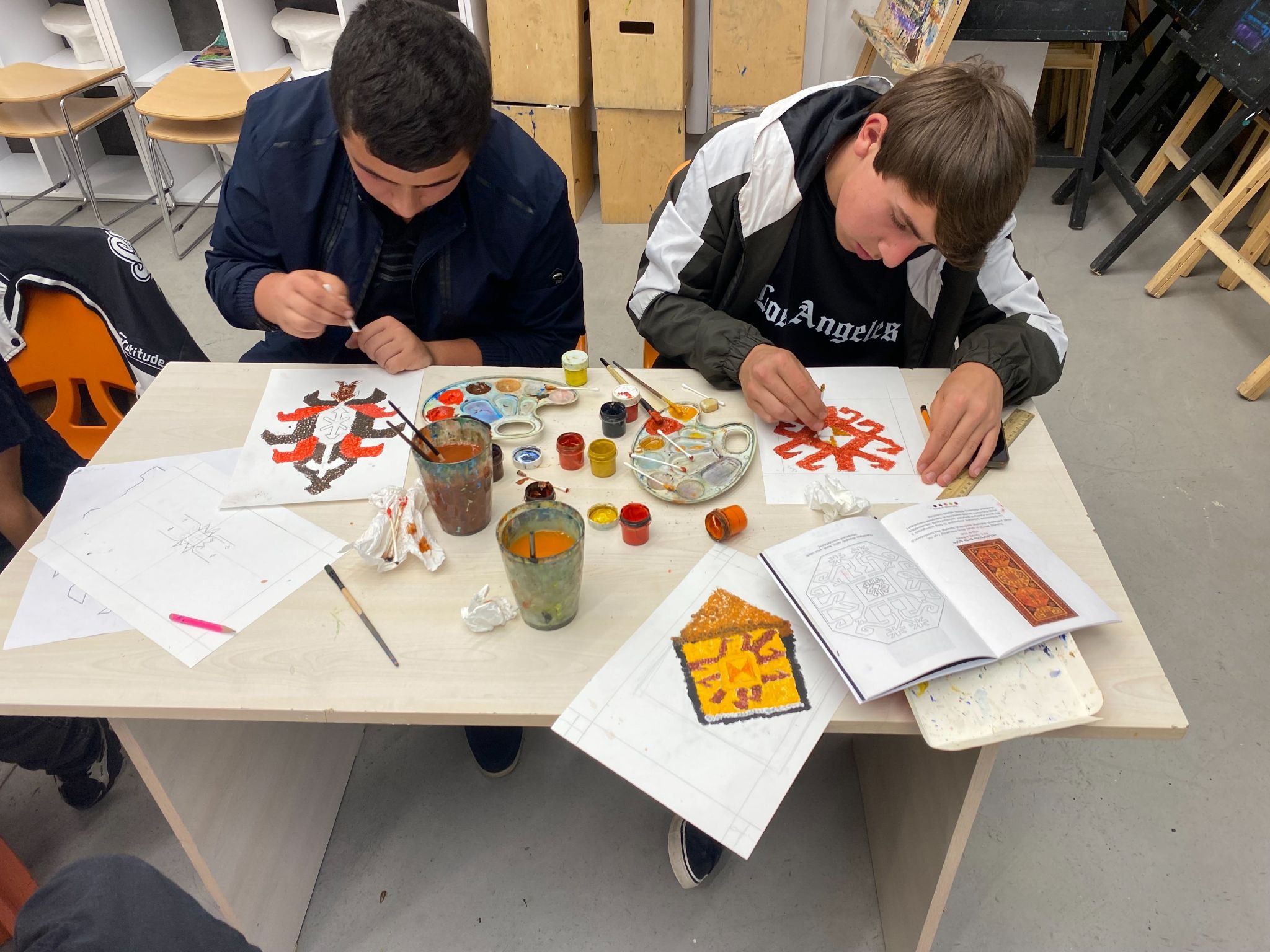
The coloring of the collage designs was critical to preserving the color palette of each carpet.

The work plan.
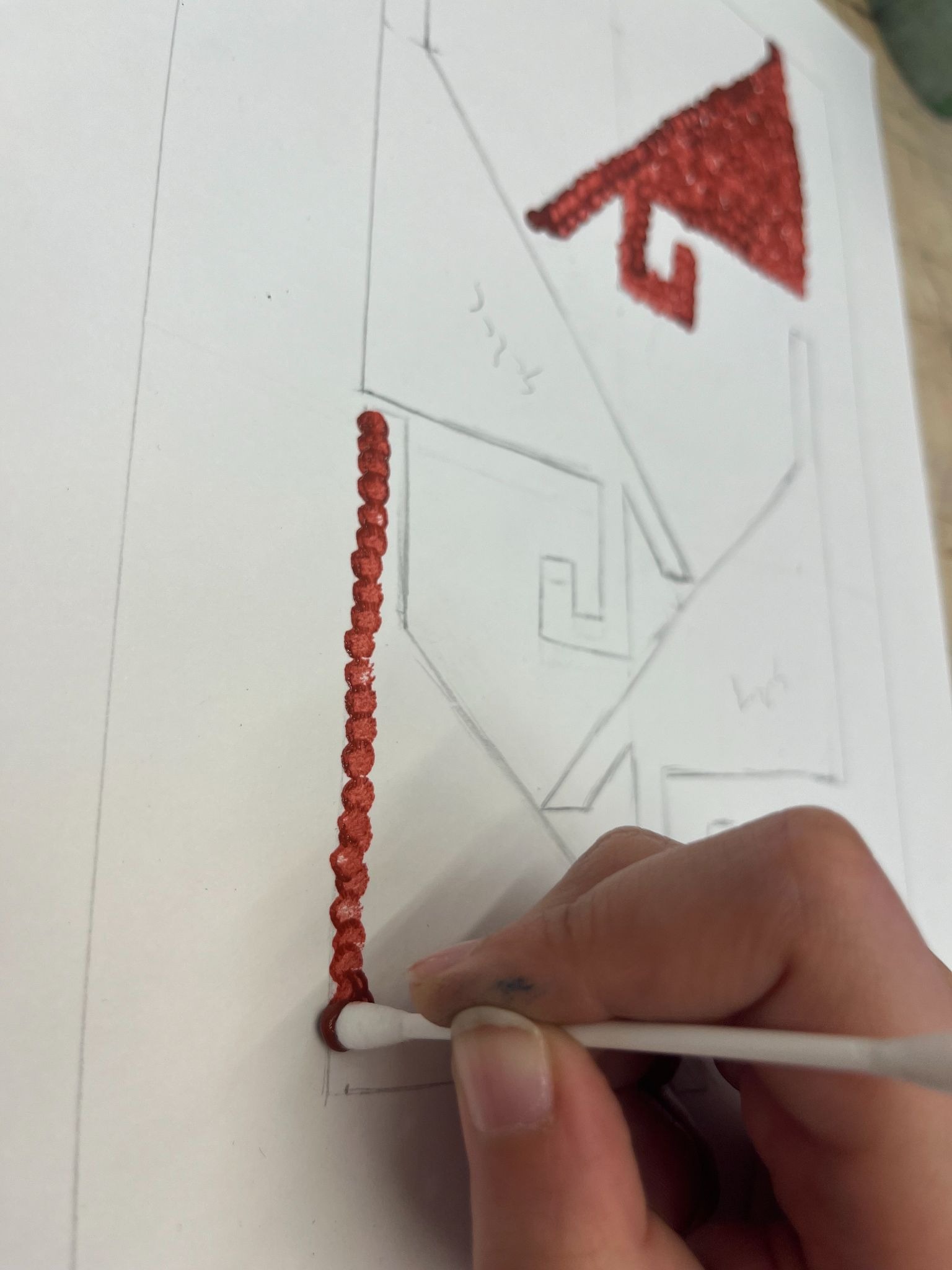
The collages were created in the pointillist style—using cotton swabsto compose the designs using tiny colorful dots.
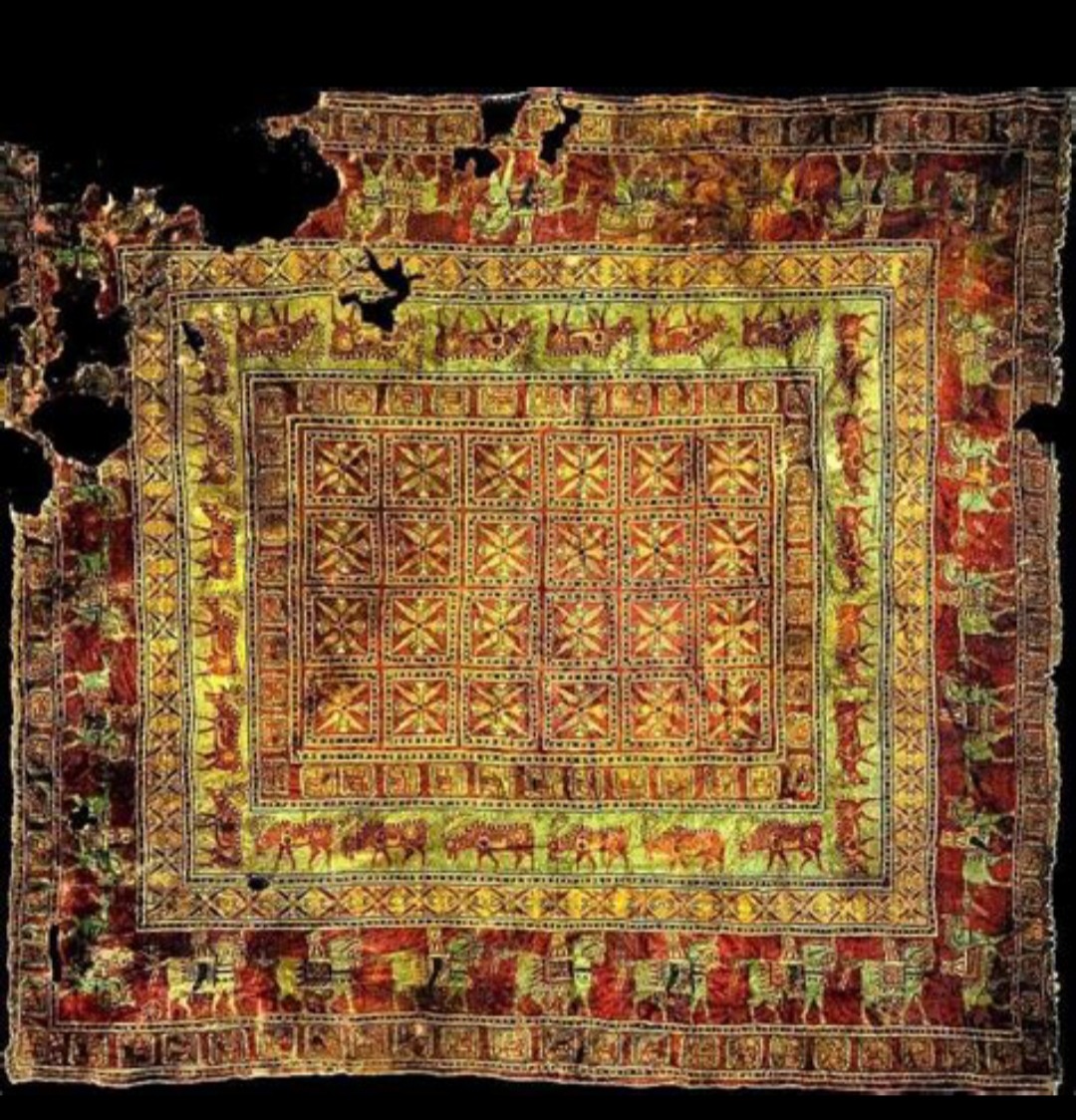
The Pazyryk Carpet is the world’s oldest known knotted carpet, dating back to the 5th century BCE. It was discovered in 1949 in the Pazyryk burial mounds of the Altai Mountains by Soviet archaeologist Sergey Rudenko. The carpet was preserved in exceptionally good condition because it had been frozen inside an ice-filled tomb. It depicts horse riders, deer, and geometric ornaments characteristic of ancient Eastern carpet weaving traditions. Today, the carpet is preserved at the Hermitage Museum in Saint Petersburg, Russia.
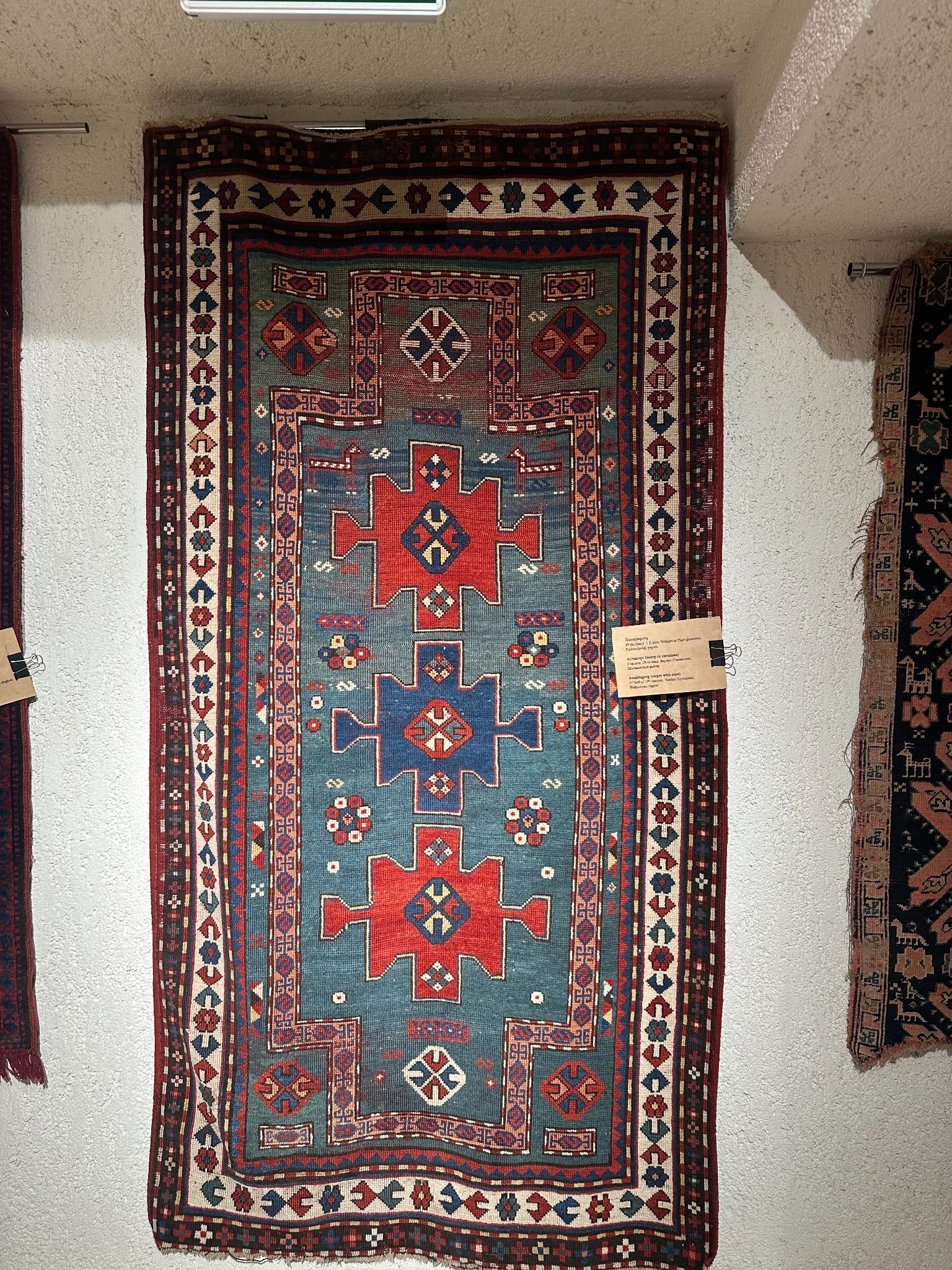
Star Carpets are distinguished by their geometric designs, often featuring 8- or 12-pointed stars, sometimes surrounded by bouquets or other geometric decorations. They are mainly associated with Armenian, Persian, and Caucasian carpet-weaving traditions. The oldest discovered Star Carpets date back to the 13th–15th centuries.
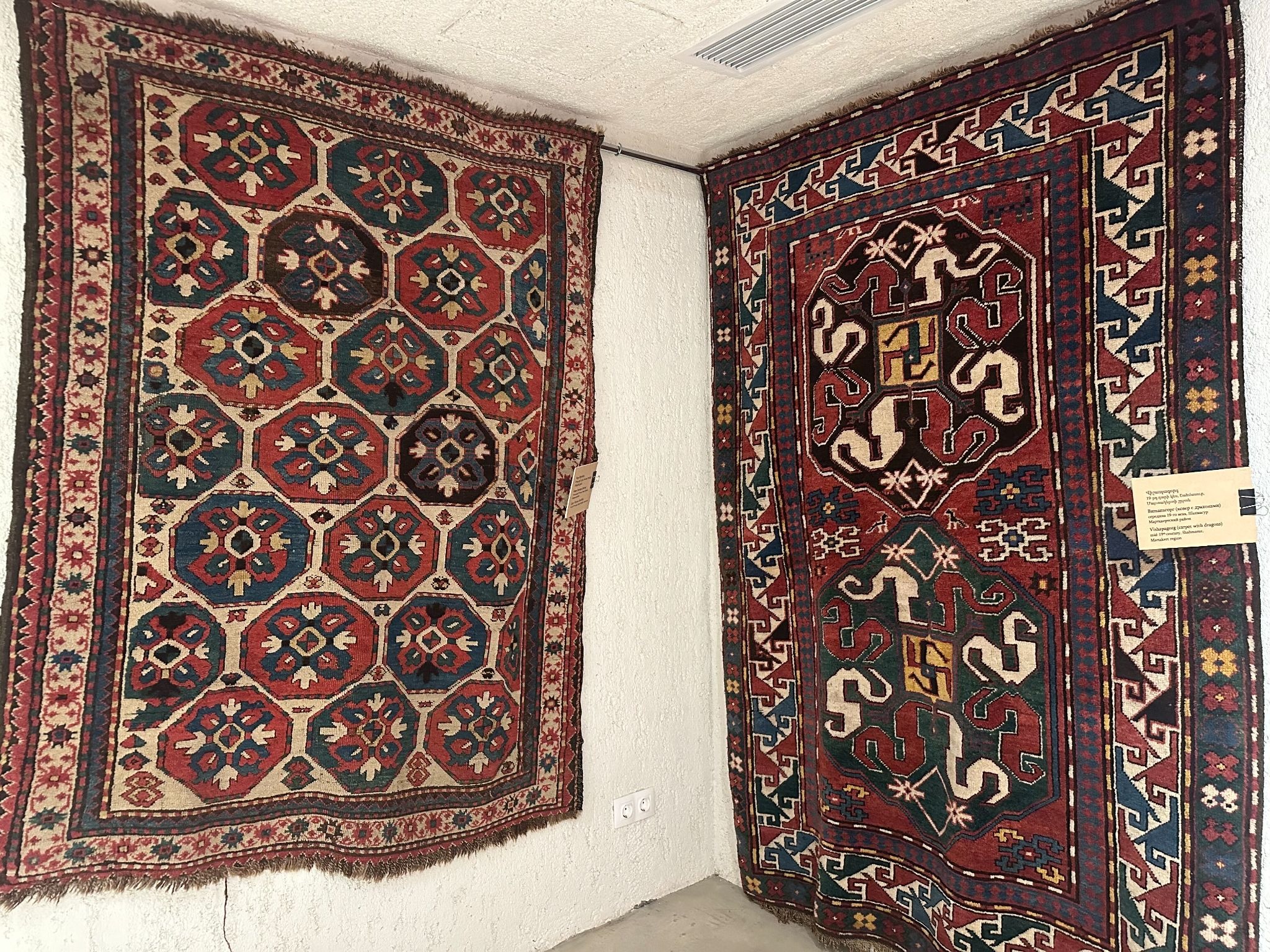
Dragon Carpets are characterized by their large size, a single bordering ornamental band, and four dominant colors: red, blue, brown, and ivory. The primary color is usually bright red obtained from Armenian cochineal dye, whose main production center was the Ararat Plain. It is believed that this region was also the center of origin and production for the earliest Dragon Carpets until the 17th century, after which the classical group disappeared, surviving only through numerous folk variations.
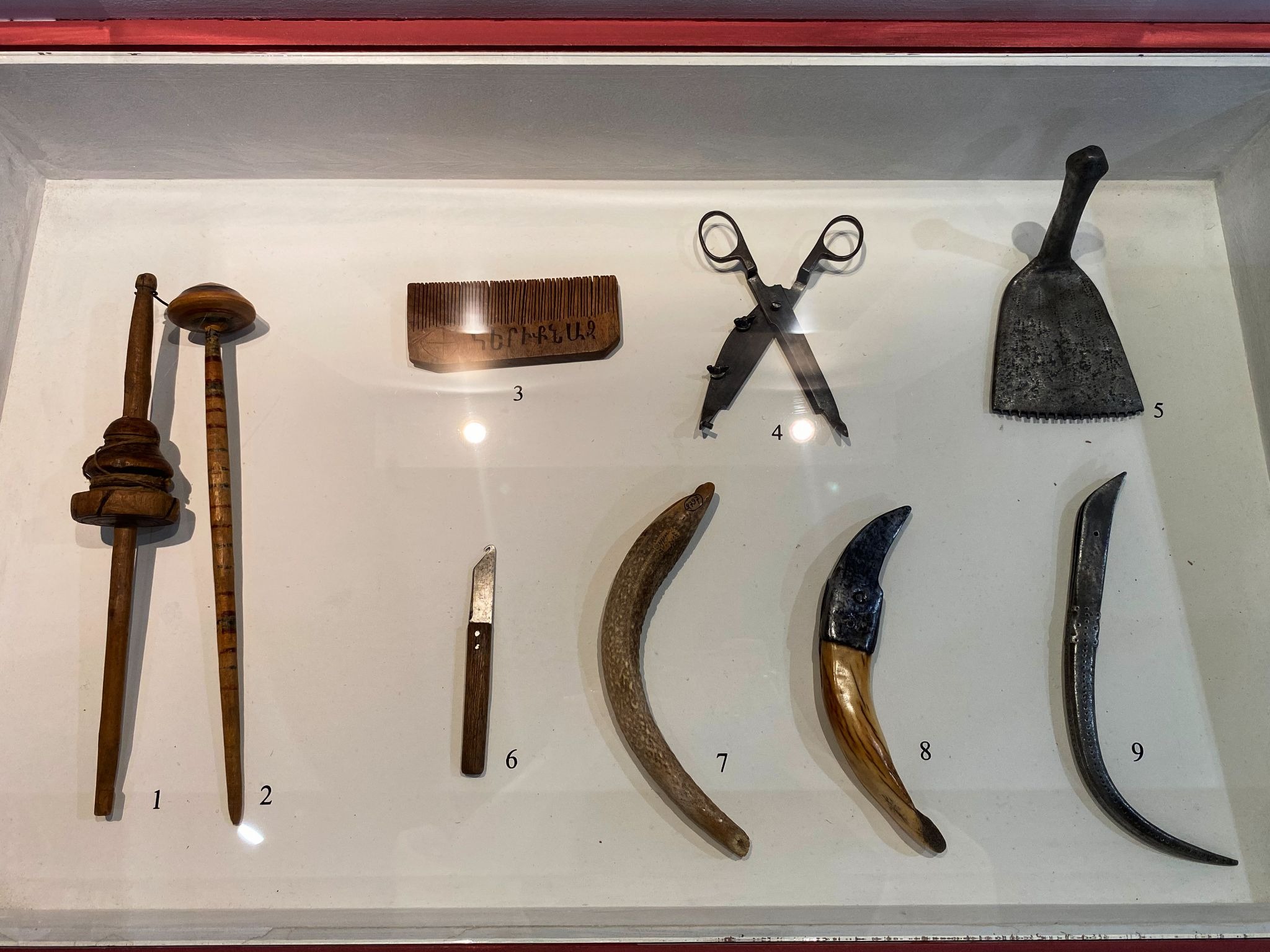
These are traditional tools used in carpet weaving and wool processing. They were used throughout the process, from preparing the wool to weaving the carpet itself.