


 EN — English
 HY — Հայերեն
 FR — Français
New Skills, New Mindsets, New Opportunities: When AI Meets COAF’s Civic Education Program
*Ce blog a été traduit à l’aide de l’IA

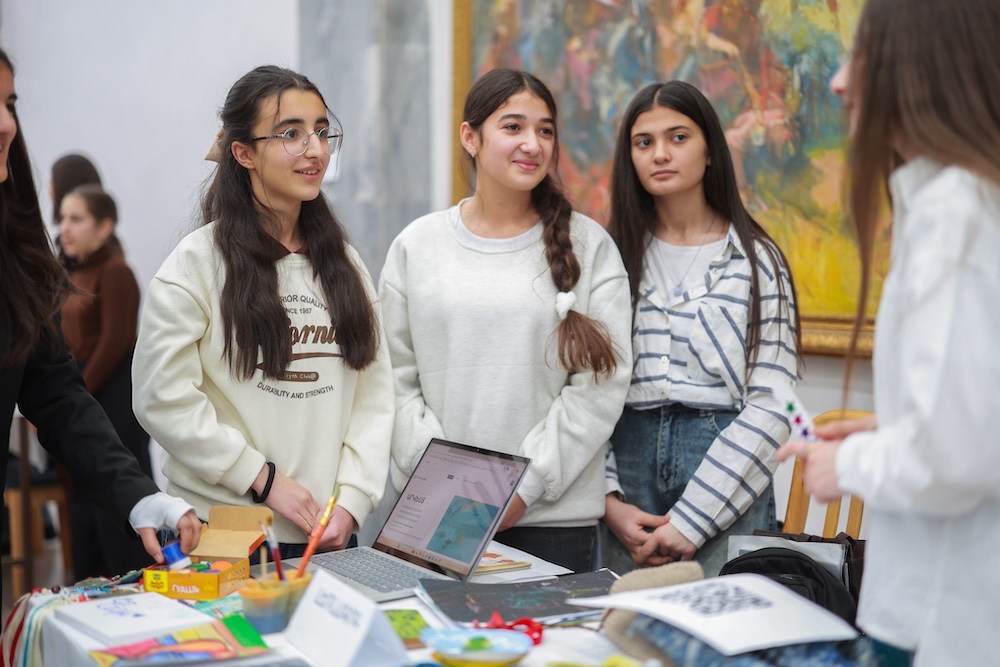
This article was contributed by Lyudmila Shirvanyan, Civic Education Instructor at the Children of Armenia Fund (COAF).
The omnipresence of artificial intelligence (AI) in the lives of adolescents is a reality that’s here to stay, and it is significantly transforming how education is perceived, the ways it is organized, and even the nature of daily activities surrounding it. While the widespread adoption of AI introduces new challenges in maintaining curiosity toward learning, it also creates new opportunities—especially for children living in rural communities with limited access to resources.
In the dual-natured context, it becomes especially important to adopt educational approaches that can turn AI into an effective learning tool. This is precisely where a key component of COAF’s Civic Education Program began to take shape last year—demonstrating how learning about AI can become transformative for participating youth. It helps adolescents develop critical thinking, digital literacy, and creativity, propose alternative solutions to community challenges, and grow into in-demand professionals of the future.
Getting to Know Artificial Intelligence
Through AI-focused courses, participants not only become familiar with ethical principles and the challenges associated with AI use, but also explore generative tools, experiment, and create their own small projects. This allows youth (and anyone, really) to generate images and videos, turn their favorite poem into rhythmic music, or create podcasts without deep technical knowledge?
For example, they imagine the kind of education and skills a future agrotechnologist might need by creating a corresponding “CV.” This process elevates students’ understanding of generative AI, helping them develop responsible digital behavior, recognize deepfakes*, critically assess AI-generated content, and use it responsibly.
Stories that Break Stereotypes
When the fight against stereotypes meets technology (and our Civic Education Program students), innovative initiatives emerge—ones that promote inclusion and help shape a more equal society.
Meet the fairy tales created by participants of the Civic Education Program in Aygevan—stories about the wise princess Arevik, Tigran the pastry chef, and Mane the architect. These fun, new narratives carry an important message: professions are not defined by gender, and care-giving roles and responsibilities should be shared equally.
.png)
This project is a vivid example of collaboration between creative youth and AI. First, participants developed the ideas and content. Then they involved kindergarten children and primary school students to illustrate the characters. Finally, AI tools were used to transform these drawings into colorful, engaging characters, enriching the stories and making them more impactful.
This is one way artificial intelligence does not replace human creativity—it amplifies it, bringing to life ideas that combine education, values, and innovation.
Applying AI in Civic Initiatives
As technology advances rapidly, public concerns continue to grow—particularly around whether machines will replace people and professions. At the center of this discussion today is artificial intelligence.
In Nalbandyan, within the framework of a community development project, participants sought to address these concerns by reducing extreme perceptions of AI and promoting AI literacy among schoolchildren. This was the first initiative of its kind in the community, aimed not only at responding to concerns but also at emphasizing the importance of responsible and informed AI use.
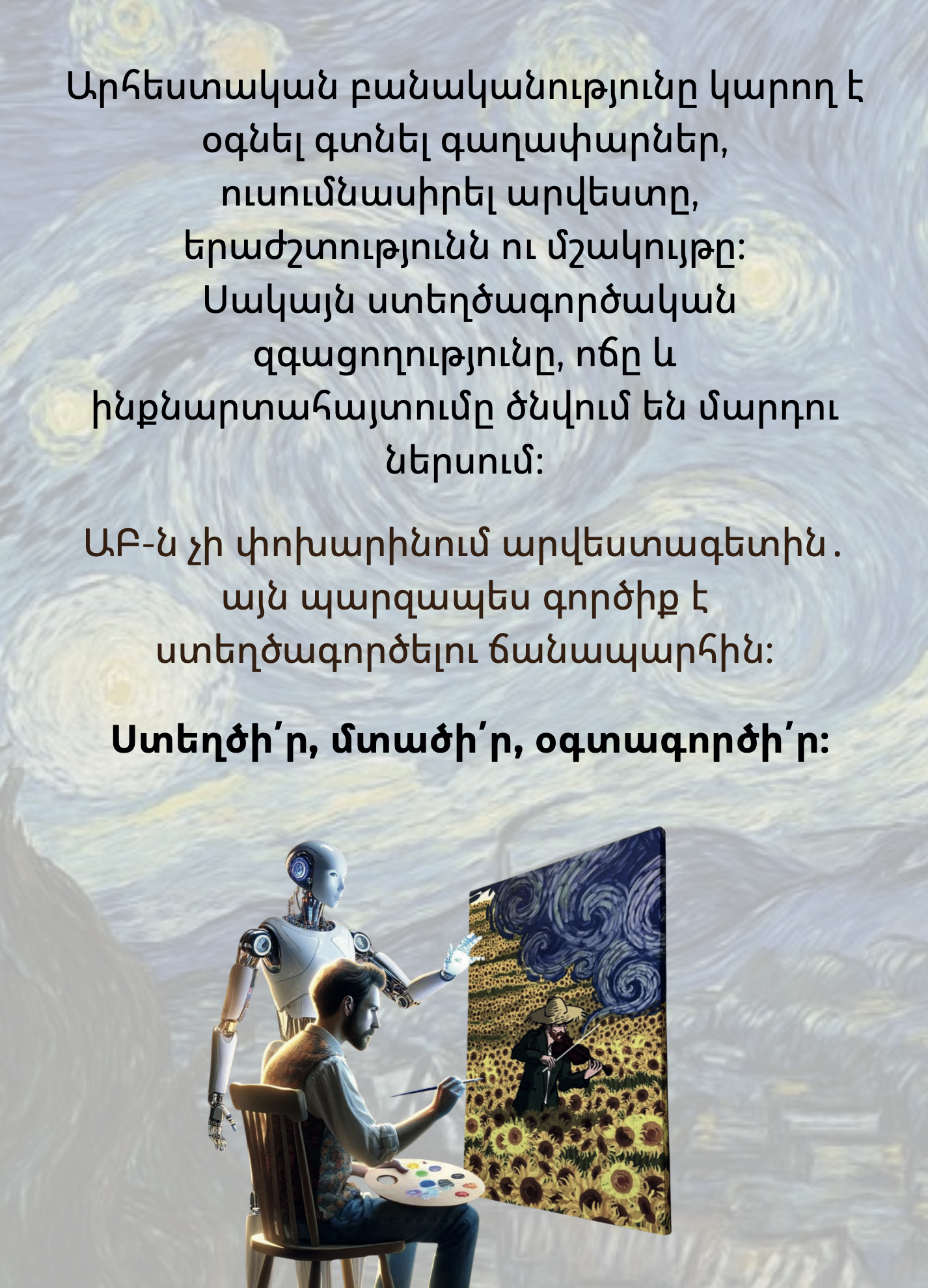
“AI does not replace human thinking—it supports the learning process and cannot replace doctors or decision-makers,” the students shared as they visited various community institutions. Through these visits, they contributed to shaping public discourse on AI among different age groups.
At the same time, engaged teens required more modern approaches. A five-day awareness campaign on Snapchat used interactive visuals, quizzes, and videos to encourage over 100 adolescents to think about AI’s possibilities and limitations, reconsider their motivations for using it, and approach AI-generated content more critically.
A New Frontier for Civic Education
Civic education becomes the space where opportunity meets public interest, where the fight for fairness intersects with the development of more conscious and capable citizens.
By combining AI education with civic initiatives, COAF’s Civic Education Program helps develop knowledge and skills while fostering responsibility, values-based thinking, and critical awareness. As a result, artificial intelligence ceases to be merely a technological tool and shows potential to be a means for social change—contributing to the creation of a more just, inclusive, and informed society.